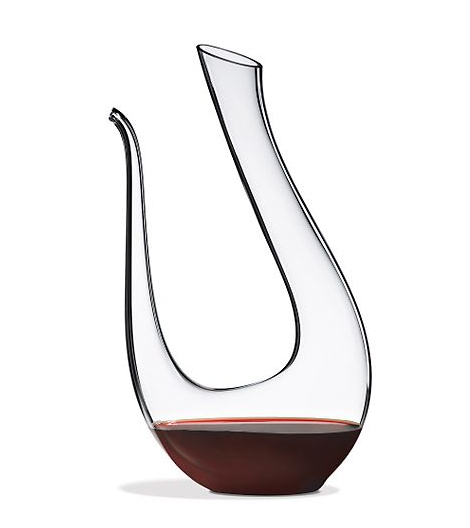
mingle with air, it will typically warm up and the wine's aromas will open up, the flavor profile should soften and mellow out a bit and improve the overall intensity. Typically red wines are the ones to benefit most from breathing before serving. However, there are select whites that will also improve with a little air exposure and as they warm up in the glass. In general, I have found that most wines will improve with as little as 15-20 minutes of air time. I think of a bottle of wine as having traveled a long distance from grape to glass and deserves a little rest and respect, so why not let it breathe!?! After doing a little research I found that in fact, some wines don't particularly benefit from the practice of 'breathing' at all and a few might actually suffer because of it, especially an older wine that is already fully mature. An older wine may have become fragile with age and give up its flavors quickly after it is poured. I have experienced this with some age old vintages with very big price tags...the wine was simply "gone" the instant it was poured into the glass! No body, thin on flavor
 and weak aromas. Allowing a
wine to breathe seems to work best and awaken wines that are in their
youth, before they are really ready to consume. Young wines are often
'tight' and may seem closed or not accessible, showing little aroma or
flavor...they also may be tannic
which mellows given time. Another option to decanting is to pour a small bit of wine into your
glass allowing it to 'coat' the glass, then moving it to the largest
portion of the glass thus allowing air to hit as much wine as
possible. Then just let it sit a few minutes before drinking. Wines with
high tannins, Cabernet's, Syrah's, will generally need more time to breath whereas lighter bodied wines like Pinot Noir's
may need little or no time at all. To me wines are never
'static'...they evolve on the vine, in the barrels, bottle and glass,
and as your meal progresses, so will your wine! Have some fun and
experiment with this concept!
and weak aromas. Allowing a
wine to breathe seems to work best and awaken wines that are in their
youth, before they are really ready to consume. Young wines are often
'tight' and may seem closed or not accessible, showing little aroma or
flavor...they also may be tannic
which mellows given time. Another option to decanting is to pour a small bit of wine into your
glass allowing it to 'coat' the glass, then moving it to the largest
portion of the glass thus allowing air to hit as much wine as
possible. Then just let it sit a few minutes before drinking. Wines with
high tannins, Cabernet's, Syrah's, will generally need more time to breath whereas lighter bodied wines like Pinot Noir's
may need little or no time at all. To me wines are never
'static'...they evolve on the vine, in the barrels, bottle and glass,
and as your meal progresses, so will your wine! Have some fun and
experiment with this concept!